



How to import trade show leads into Zoho CRM (step by step)
Import trade show leads into Zoho CRM from a spreadsheet: file limits, required fields, duplicates, a campaign for the event, and how to undo an import.
To import trade show leads into Zoho CRM, save them in one CSV, XLS or XLSX file with a header row, open the Leads module, click the arrow next to Create Lead and choose Import Leads. Map the columns, pick Email as the unique field so existing leads are not added twice, and set the Lead Source and a tag for the show with a default value. Then add the new leads to a campaign for the event, so you can measure it later.
This guide is for sales teams that use Zoho CRM and come back from a trade show with a badge export, a spreadsheet or a pile of business cards. Every fact about Zoho CRM links to the Zoho CRM help pages.
Prepare the import file for Zoho CRM
Zoho CRM imports CSV, XLS, XLSX and VCF files. A file can be up to 25 MB and have up to 500 columns (Zoho CRM: import data into a module). The number of rows per import depends on your edition:
| Zoho CRM edition | Max rows per import |
|---|---|
| Free | 1,000 |
| Standard | 20,000 |
| Professional | 50,000 |
| Enterprise | 100,000 |
| Ultimate and CRM Plus | 200,000 |
Source for the row limits: Zoho CRM help. A trade show list is much smaller, so the real work is clean columns. Two more rules from the same page: the import stops after more than 10 empty rows in a row, and you need the Import Records permission in your profile.
| Column in your file | Zoho CRM lead field | Note |
|---|---|---|
| Last name | Last Name | Required. Every lead needs it (Zoho CRM: lead fields) |
| Company | Company | Required too. Write “Unknown” only if you really have no company |
| First name, Email, Phone, Job title | First Name, Email, Phone, Designation | Email is also the best field to find duplicates |
| Trade show | Tag | Separate more tags with commas, for example “ISE 2027,Hot” |
| Booth notes | Description | Or a custom field, so sales sees the note on the lead |
How to import trade show leads into Zoho CRM, step by step
The steps below follow Zoho's own guide to importing data into a CRM module.
Step 1: Open the import
Go to the Leads module. Click the down arrow next to Create Lead and select Import Leads.
Step 2: Upload the file
Drag and drop the file or browse for it. Leave the character set on Auto-Detect unless names with accents look wrong.
Step 3: Choose how to handle existing leads
Pick Add as new and select Email as the unique field. Rows with an email that is already in Zoho CRM are skipped, so nobody gets a second record.
Step 4: Map the columns
Auto Map matches columns to fields by name. Check every match and drag the rest to the right field.
Step 5: Set default values
Use Assign Default Value to give every row the same Lead Source and the same tag for the show. This saves you a column in the file.
Step 6: Pick the owner and start
Assign owners with an assignment rule, or leave it for later. Decide if automations should run on the new leads, then submit.
One tip for the automation step: if you leave “Trigger automation and process management” switched on, your workflows run on every imported lead. That can mean hundreds of welcome emails at once. Switch it off if you want to send the first follow-up by hand (Zoho CRM).
Track the show with a campaign in Zoho CRM
A tag tells you where a lead came from. A campaign tells you what the show brought in. Zoho CRM has a Campaigns module, and trade show is one of the campaign types Zoho gives as an example (Zoho CRM: creating campaigns).
- Create the campaign. Open Campaigns, click Add, give it a clear name such as “2027-02 ISE Barcelona” and save.
- Add the imported leads. In the Leads module, select the new leads, click More, then Add to Campaigns, and pick the campaign.
- Or import straight into it. On the campaign page, click Import My Leads. Zoho notes that the first member status is applied to all imported leads (Zoho CRM).
- Use member status. Zoho's own trade show example uses statuses such as Invited, Attended and Not Attended. You can have up to 50 values and update them in bulk with Mass Update Member Status.
With the campaign in place, add the booth, travel and staff costs, and you can work out your trade show ROI per show.
After the import: check, fix and undo
- Look at the skipped rows. Go to Setup, Data Administration, Import, Import History. Open the import, click View Imported Modules, then the Skipped count to see why rows failed. You can download the failed rows for 7 days (Zoho CRM).
- Undo a wrong import. In Import History, hover over the import and click Undo Import. This works for 30 days, and only for records that were added. Changes to existing records can't be undone.
- Convert only the good leads. Converting a lead creates an account, a contact and, if you want, a deal. Notes move to the account and contact. A converted lead can't be turned back into a lead (Zoho CRM: leads FAQ).
- Send the follow-up. The sooner the better. Our trade show follow-up email guide has timing and templates.
Common mistakes with event leads in Zoho CRM
- No unique field. With Add as new and no Email check, existing customers who stopped by get a second lead.
- Automations left on by mistake. A big import starts every workflow at once, before anyone has read the booth notes.
- Every visitor becomes a deal. Keep booth contacts as leads until sales has checked the note and there is a real next step.
- Free text for the show name. “ISE”, “ISE 2027” and “ise barcelona” split one show into three in your reports. Pick one pattern.
- Typing cards into a spreadsheet. It takes hours after a long show and adds typos to the email column, which is the field Zoho uses to find duplicates.
Before you email anyone, check that you have a lawful basis. Our guide on GDPR for trade show leads explains consent, legitimate interest and how long to keep event data. If your team uses another CRM, read how to import trade show leads into HubSpot, into Pipedrive, or how to track them in Salesforce with campaigns.
From badge to Zoho CRM without a spreadsheet
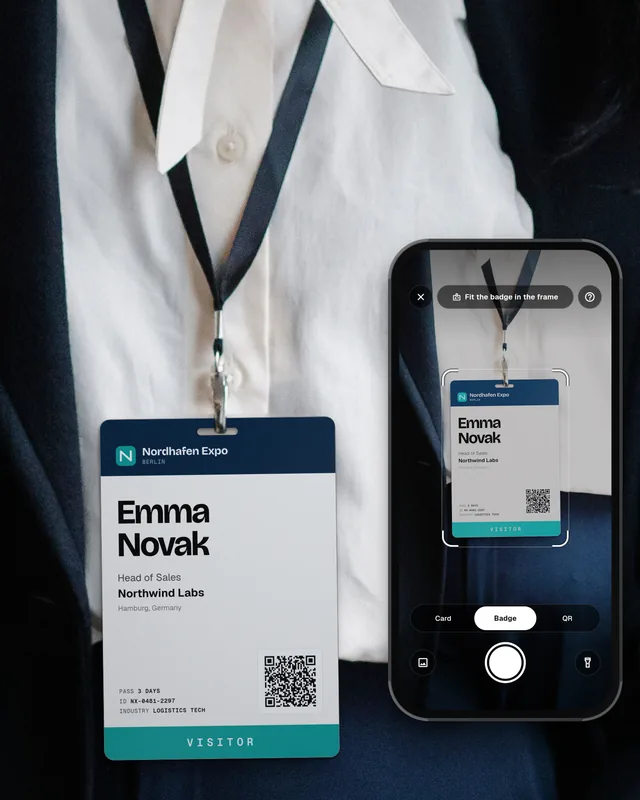
With Swopi there is no file to clean and no import to run. You connect Zoho CRM once in the Swopi dashboard and turn on automatic sync. Your team scans badges, business cards and QR codes on their own phones, and each lead appears in Zoho CRM in seconds, in standard fields, with the event name attached. Swopi AI adds the missing email and company data from 20+ data providers and drafts the follow-up email. Leads without typing. See pricing, or read how to scan event badges into your CRM.
How do I import leads into Zoho CRM from Excel?
Save the leads in one XLS, XLSX or CSV file with a header row. In the Leads module, click the arrow next to Create Lead, choose Import Leads, upload the file, map the columns and submit.
How many records can I import into Zoho CRM at once?
It depends on the edition: 1,000 rows in Free, 20,000 in Standard, 50,000 in Professional, 100,000 in Enterprise and 200,000 in Ultimate. The file can be up to 25 MB.
How do I avoid duplicate leads when importing into Zoho CRM?
Choose Add as new and select a unique field such as Email. Rows that match an existing lead are skipped. Choose Both if you want matching leads updated instead.
How do I tag leads from a trade show in Zoho CRM?
Use Assign Default Value during the import to set the same tag and Lead Source on every row. Then add the leads to a campaign for the show to track results.
Can I undo an import in Zoho CRM?
Yes, for 30 days. Go to Setup, Data Administration, Import, Import History, hover over the import and click Undo Import. Only added records are removed, updates to existing records stay.